30% Federal Solar Tax Credit (ITC) in 2026: Complete Homeowner & IRS Form 5695 Guide

"The 30% Residential Clean Energy Credit is a dollar-for-dollar reduction of your federal income tax liability—not merely a tax deduction. On a $26,000 solar and battery installation, that is $7,800 back in your pocket." — 2026 Market Analysis by Juliet D.
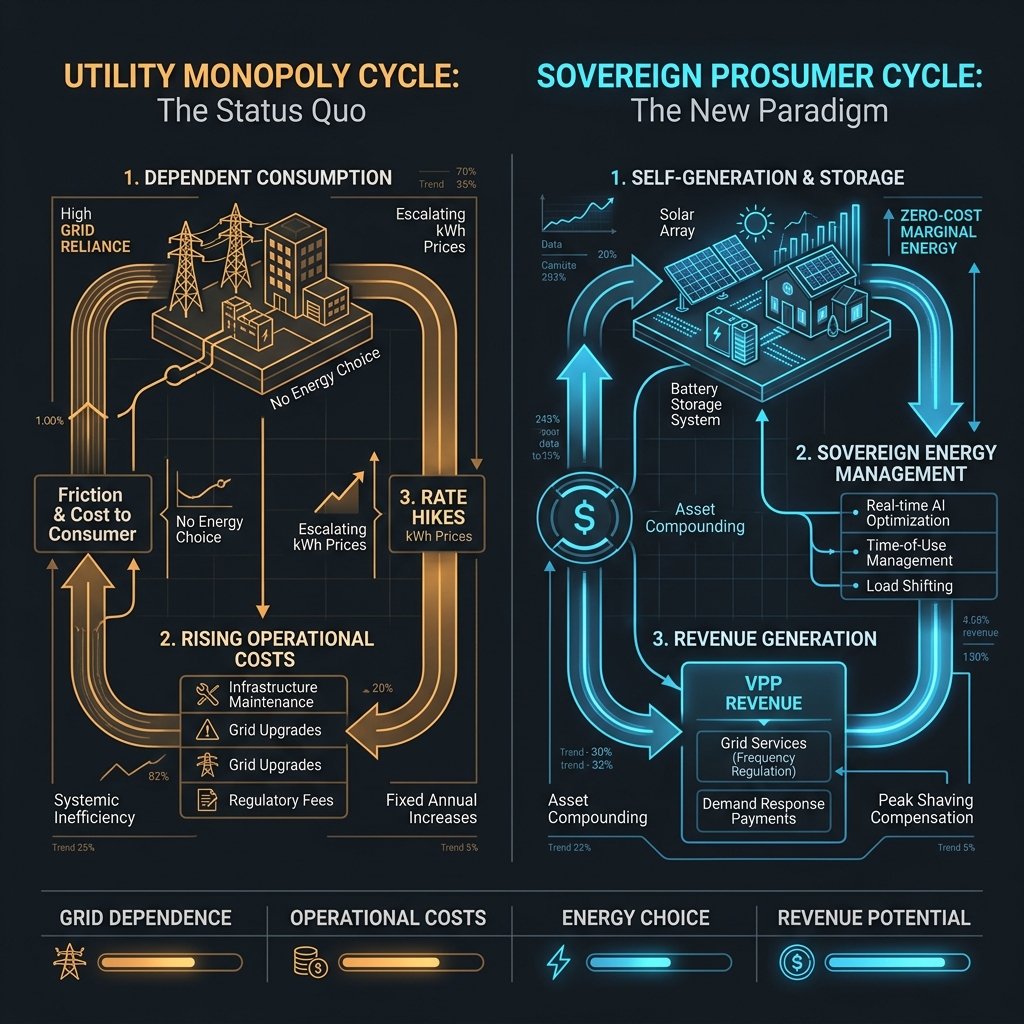
How the 30% Federal Solar Tax Credit Works in 2026
Officially titled the Residential Clean Energy Credit (IRC Section 25D), the 30% federal solar tax credit allows U.S. homeowners to claim 30% of their total installation cost as a direct reduction against their federal income taxes owed. Unlike a deduction (which only lowers your taxable income bracket), a tax credit reduces your actual tax bill dollar-for-dollar.
There is no dollar cap on the credit. Whether your residential solar array and battery system cost $15,000 in Texas or $42,000 for a large estate in California, the credit scales to a full 30% of qualified expenditures.
| System Package | Gross Installed Cost | 30% Federal ITC Credit | Net Homeowner Cost |
|---|---|---|---|
| 6 kW Rooftop Solar Array | $16,800 | -$5,040 | $11,760 |
| 9 kW Solar Array (Standard Home) | $25,200 | -$7,560 | $17,640 |
| 10 kW Solar + 13.5 kWh LFP Battery | $38,500 | -$11,550 | $26,950 |
| Standalone Battery Upgrade (3 kWh+ LFP) | $12,500 | -$3,750 | $8,750 |
What Expenses Qualify for the 30% Credit?
Under IRS guidelines for 2026, the following project costs are 100% eligible to be included in your basis when calculating the 30% credit:
- Solar PV Panels & Inverters: All N-Type monocrystalline panels, microinverters, or hybrid string inverters (see our 2026 Solar Cost Guide).
- Home Battery Storage (3 kWh Minimum): Both solar-coupled batteries and standalone home battery systems rated at 3 kWh or greater qualify for the full 30% credit (see our Battery Storage Guide).
- Installation Labor & Permitting: Onsite preparation, mounting hardware, electrical wiring, municipal permitting fees, and utility interconnection inspection costs.
- Main Electrical Panel Upgrades: If a main service panel (MPU) or sub-panel upgrade is required to safely interconnect your solar or battery storage system, it may qualify alongside the installation.
- Sales Tax: Any state or local sales tax paid on qualified equipment (though states like Florida, New Jersey, and Washington already exempt solar hardware from sales tax).
Who Qualifies (and Why Leases Do Not)
To claim the 30% Federal ITC on your personal return, you must meet three core criteria:
- You Must Own the System: You must purchase the system via cash or a solar loan. If you sign a third-party solar lease or Power Purchase Agreement (PPA), the leasing company keeps the 30% tax credit—not you. Compare ownership models in our Lease vs. Loan vs. Purchase Analysis.
- Primary or Secondary U.S. Residence: The system must be installed on a home you live in within the United States (full-time rental properties you never occupy follow commercial depreciation/ITC rules instead).
- Placed in Service in the Tax Year: The IRS defines "original installation completion" (when the system is installed and ready for operation) as the tax year in which you claim the credit.
What If My Tax Credit Is Larger Than My Taxes Owed?
The Residential Clean Energy Credit is non-refundable, meaning the IRS will not send you a check beyond what you owed in federal income taxes for that single year. However, under IRC Section 25D(c), any unused portion of your 30% credit automatically rolls forward to the next tax year.
For example, if your 30% credit is $8,400 and your total federal tax liability for 2026 is $5,400, you wipe out your entire $5,400 tax liability for 2026 and carry the remaining $3,000 credit forward to your 2027 tax return.
Step-by-Step: How to Claim the Credit on IRS Form 5695
- Gather Your Final Itemized Invoice: Keep your installer's paid invoice separating solar PV hardware/labor and battery storage costs, plus your utility Permission to Operate (PTO) letter.
- Complete IRS Form 5695 (Residential Energy Credits): Enter your qualified solar electric property costs on Line 1 and qualified battery storage technology costs (at least 3 kWh) on Line 5a.
- Calculate 30% on Line 6b: Multiply total qualified costs by 30% (0.30).
- Transfer to Schedule 3 (Form 1040): Carry the credit from Form 5695 Line 15 to Schedule 3 (Form 1040), Line 5, which directly reduces your Form 1040 tax liability.
Frequently Asked Questions
Can I claim the 30% solar tax credit if I finance my system with a loan?
Yes. As long as you own the system via a solar loan or home equity financing (rather than a lease or PPA), you can claim the full 30% credit in the year the system is installed, even while paying off the loan over time.
Does a standalone solar battery qualify for the 30% tax credit?
Yes. Under current IRS Section 25D rules, residential battery storage systems with a capacity of at least 3 kilowatt-hours (kWh) qualify for the 30% credit whether installed alongside new solar panels or added later as a standalone upgrade.
Does roof replacement count toward the 30% solar tax credit?
Traditional roofing materials and structural rafters do not qualify for the 30% solar tax credit. Only the solar mounting hardware, racking, panels, wiring, and active solar shingles/tiles themselves qualify.
Get Your Free National Solar Savings Estimate
Compare verified 2026 residential solar installation quotes, 30% Federal ITC eligibility, and zero-down financing options in your area.
Juliet's Final Verdict
"With utility rates climbing 6% to 11% annually across major U.S. corridors, owning your solar generation and LFP storage is the single most effective hedge for household cash flow in 2026."