Grid-Shift Arbitrage: How to Sell Energy Back to the Grid in 2026

"Your battery is a private energy vault. By dynamically charging from the sun and discharging to the grid during peak hours, you transform storage from a backup cost into an income engine." — Juliet D., Energy Strategy Lead.
Introduction: The Utility Rate Arbitrage Shift
The centralized power system is structured around peak congestion. Utility companies charge premiums during high-demand hours and pay low rates when the grid is quiet. In 2026, the introduction of smart grid APIs and bidirectional battery software has unlocked the ultimate prosumer loophole: Grid-Shift Arbitrage. Home battery owners are no longer just shielding themselves from blackout risks; they are trading electricity in real time for premium returns.
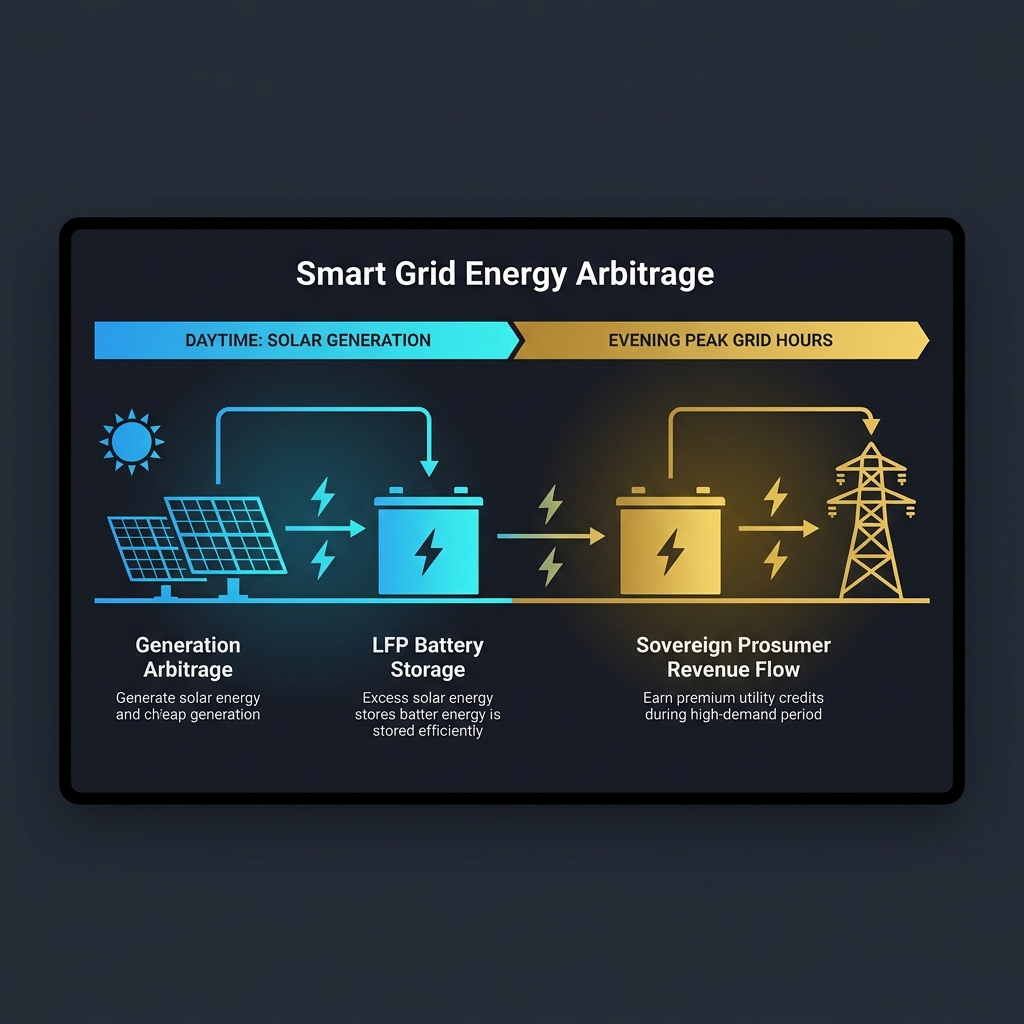
Section I: The Mechanics of Peak Shaving
Traditional net metering systems simply buy back solar energy at a flat, wholesale rate. Under a Grid-Shift Arbitrage setup, your smart energy controller monitors the dynamic tariff schedules. It charges your LFP battery bank during low-cost morning periods (using your own solar or off-peak grid power) and holds that capacity until peak evening hours (typically 4:00 PM to 9:00 PM) when regional rates skyrocket. By discharging your stored power back into the grid, you capture the spread.
Section II: The Virtual Power Plant (VPP) Integration
By coordinating your battery with local Virtual Power Plants, your home battery participates in frequency regulation and grid balancing. Operators aggregate this decentralized capacity to offset regional shortages, paying battery owners premium incentives. This makes battery storage highly lucrative, shortening the ROI window of a premium solar system down to under 5 years.
Conclusion: Reclaim Your Energy Margin
Do not let the utility company dictate your energy economics. Decide on grid arbitrage today and capture the spread. Claim your energy sovereignty.
Get Your Free National Solar Savings Estimate
Compare verified 2026 residential solar installation quotes, 30% Federal ITC eligibility, and zero-down financing options in your area.
Juliet's Final Verdict
"Solar in 2026 is no longer about being green; it is about energy independence. With utility inflation hitting record highs, securing your own generation capacity is the smartest hedge for your home equity."