Solar Panel Lifespan: The 30-Year Degradation Audit (N-Type vs. PERC)

"A solar array is a 30-year capital asset. Understanding degradation rates between N-Type and legacy PERC silicon is the difference between a high-yield investment and a failing infrastructure." — Operational Intelligence by Juliet D..
Introduction: The Reality of Silicon Aging
Every solar panel degrades over time due to thermal stress, UV radiation, and light-induced degradation (LID). However, the rate of this degradation varies dramatically based on cell chemistry. In 2026, the transition from legacy PERC (Passivated Emitter and Rear Cell) panels to advanced N-Type Monocrystalline technology has redefined the long-term economics of solar investments. This audit explores the physics and financial impact of panel degradation over a 30-year operating horizon.
Section I: N-Type vs. PERC Cell Chemistry
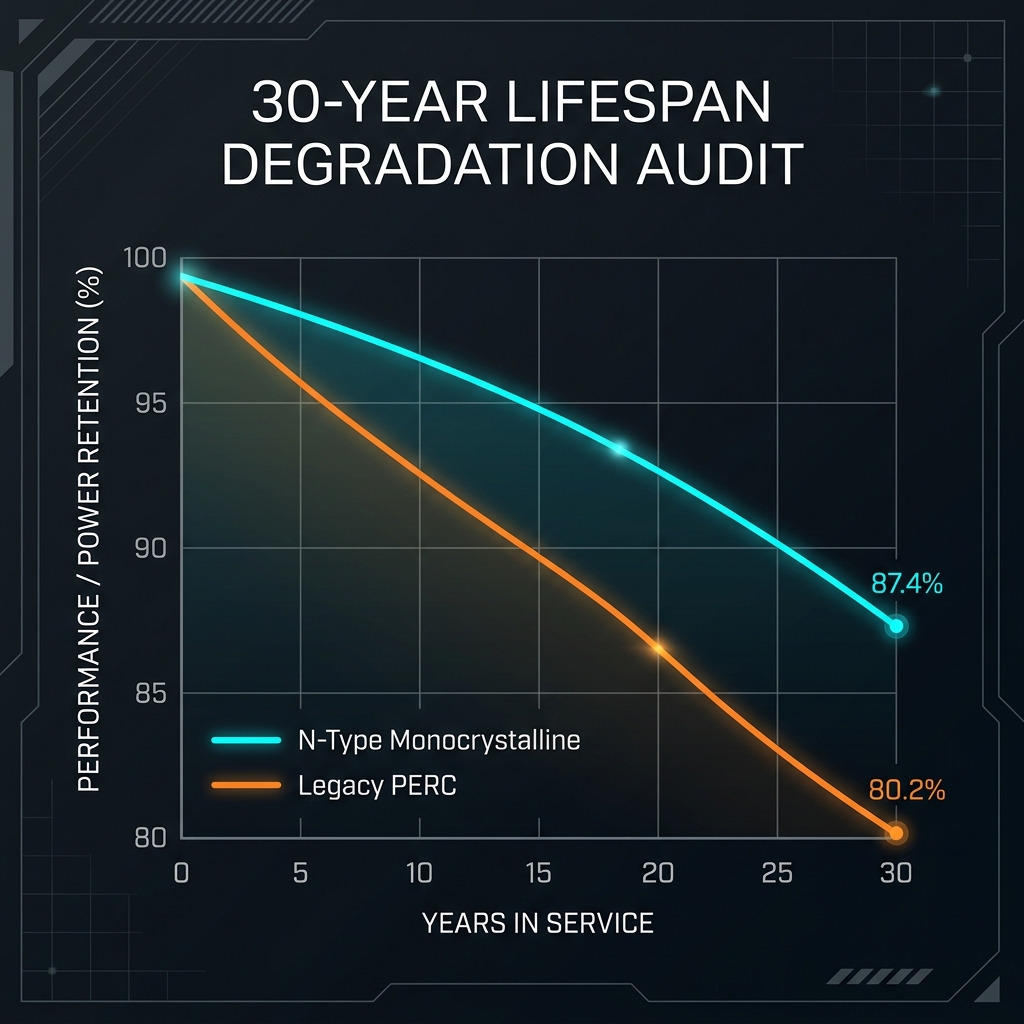
Legacy PERC panels rely on P-type silicon, which is doped with boron. This cell type is highly susceptible to Boron-Oxygen defects, causing Light-Induced Degradation (LID) that drops panel efficiency by 1.5% to 3% in the first few weeks of operation. N-Type cells use phosphorus doping, completely eliminating LID. This results in a degradation rate of just 0.25% to 0.4% per year, compared to the 0.5% to 0.8% annual degradation of PERC panels.
Section II: The 30-Year Performance Yield
Over a 30-year lifespan, the cumulative difference in energy production is massive. N-Type panels will retain over 87.4% of their original capacity at year 30, while legacy PERC cells struggle to stay above 80.2%. This performance premium translates directly into thousands of dollars of extra clean electricity generated, locking in your long-term energy security.
Conclusion: Invest in Lifetime Yields
When selecting your solar hardware, do not look only at the initial cost. Choose N-Type panels to guarantee a 30-year high-performance energy stream. Protect your capital today.
Get Your Free National Solar Savings Estimate
Compare verified 2026 residential solar installation quotes, 30% Federal ITC eligibility, and zero-down financing options in your area.
Juliet's Final Verdict
"Solar in 2026 is no longer about being green; it is about energy independence. With utility inflation hitting record highs, securing your own generation capacity is the smartest hedge for your home equity."