Smart Solar Integration: Architecting the Self-Optimizing Home in 2026

"Sovereignty requires automation. By linking your smart home controls to your solar inverter and battery status, your house automatically adjusts its demand to match the sun's production." — Juliet D., Energy Strategy Lead.
Introduction: The Programmable Home Power Node
Having solar panels and battery storage is only half the battle. To maximize your energy yield, your home must actively adapt its consumption to align with your generation. In 2026, the integration of Home Assistant and smart grid APIs with local inverters has enabled the Self-Optimizing Home. Your house is no longer a passive container of appliances; it is a programmable grid node that dynamically shifts loads to minimize utility friction.
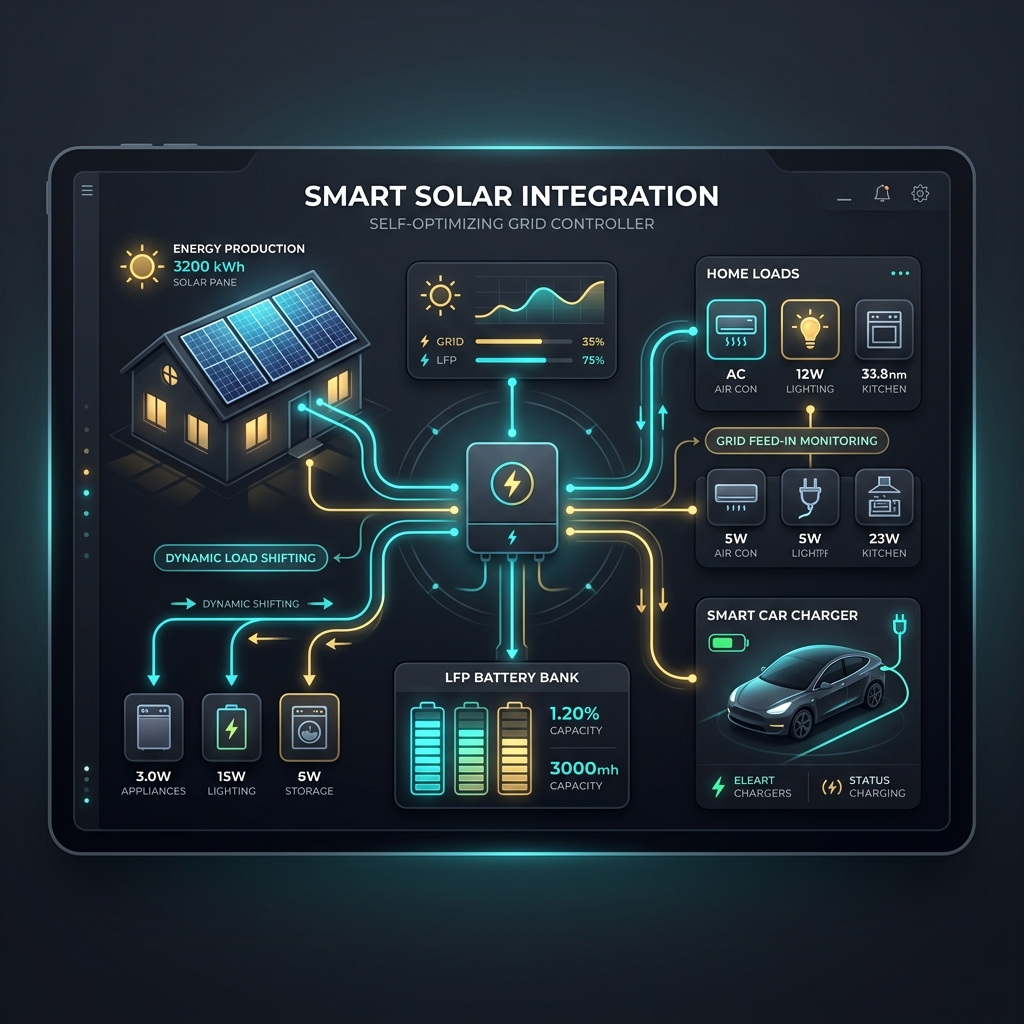
Section I: Dynamic Load Shifting Protocol
Smart load shifting automatically schedules high-draw appliances—such as EV chargers, HVAC cooling cycles, and water heaters—to run during periods of peak solar generation. By utilizing this dynamic system, you bypass the need to draw power from the battery or grid for high-wattage operations, ensuring your home remains a closed-loop sovereignty system.
Section II: Battery-State Automation
Automation logic monitors your LFP battery's state of charge. When the battery level drops, the smart home controller puts appliances into energy-saving modes. If a utility grid blackout is predicted, the system automatically runs pre-cooling cycles, charges EVs to full, and reserves battery power for essential services. This is true operational resilience.
Conclusion: Build the Self-Optimizing Home
Automate your energy independence. Decide on smart home solar integration today to maximize your production. Command your power.
Get Your Free National Solar Savings Estimate
Compare verified 2026 residential solar installation quotes, 30% Federal ITC eligibility, and zero-down financing options in your area.
Juliet's Final Verdict
"Solar in 2026 is no longer about being green; it is about energy independence. With utility inflation hitting record highs, securing your own generation capacity is the smartest hedge for your home equity."